
Why Food Colour Innovation Matters in the Food Industry
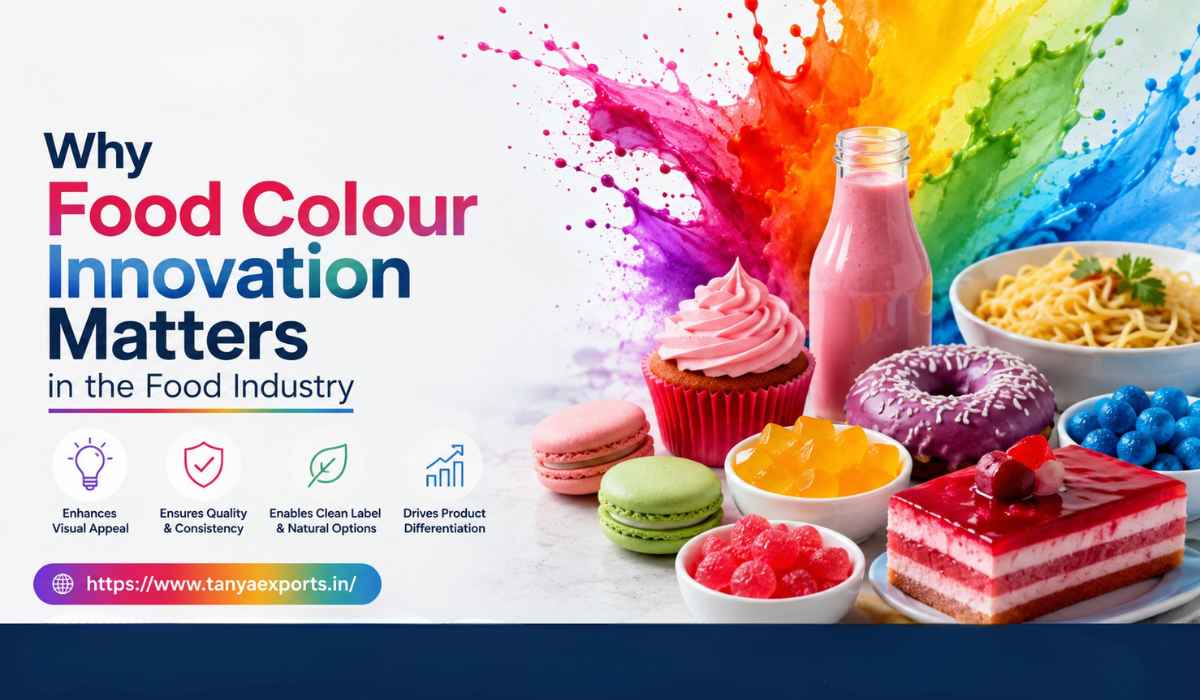
Food colours have become an essential part of modern food manufacturing because they influence how consumers perceive quality, freshness, and flavour. In a highly competitive food industry, visual presentation plays a major role in product success. Manufacturers continuously focus on innovation to create colour solutions that improve stability, consistency, and processing efficiency. Modern food colour development also supports changing consumer expectations, regulatory standards, and large scale production requirements across different food categories.
The Growing Need for Innovation in Food Colours
Food products undergo multiple stages during manufacturing, storage, and transportation. Colour solutions must remain stable under varying temperatures, moisture levels, and processing conditions. Innovation helps manufacturers create products that maintain their visual appeal throughout the product lifecycle.
Key objectives of food colour innovation include:
- ● Improving colour consistency
- ● Enhancing product stability
- ● Supporting efficient processing
- ● Meeting food safety standards
- ● Improving compatibility with ingredients
Many manufacturers working with tartrazine colour manufacturers focus on developing advanced colour solutions that deliver consistent performance across beverages, confectionery, bakery products, and packaged foods.
How Food Colours Influence Consumer Perception
Consumers often associate vibrant and consistent colours with freshness and product quality. Colour plays an important psychological role in influencing purchasing decisions and shaping overall eating experiences.
The following table highlights how food colours contribute to the food industry:
| Food Colour Function | Industry Benefit |
|---|---|
| Product appearance | Increased consumer appeal |
| Colour consistency | Stronger brand recognition |
| Visual differentiation | Better market positioning |
| Product enhancement | Improved presentation |
| Stability during processing | Consistent product quality |
Food colours help manufacturers maintain uniformity across production batches while ensuring products remain visually appealing on store shelves.
Technological Advancements in Food Colour Manufacturing
Technology has significantly improved the way food colours are developed and tested. Advanced manufacturing systems now allow greater precision in formulation, blending, and quality control.
Modern food colour innovation includes:
- ● Enhanced stability testing
- ● Improved contamination control
- ● Precision formulation methods
- ● Advanced quality assurance systems
- ● Better compatibility with food applications
These advancements help manufacturers produce colours that perform effectively across different processing environments. Improved technology also allows manufacturers to respond more efficiently to changing market demands and industry regulations.
Regional Manufacturing and Industry Growth
The food colour industry continues to grow as global demand for processed foods increases. Many tartrazine manufacturers in Gujarat contribute to this growth by supporting large scale food production requirements through advanced manufacturing capabilities and quality focused processes.
Regional manufacturing hubs play an important role in:
- ● Supporting industrial supply chains
- ● Improving production efficiency
- ● Encouraging innovation and research
- ● Meeting domestic and international demand
- ● Enhancing product development capabilities
As the food industry expands, manufacturers continue to invest in research and modern production technologies to improve colour stability, safety, and consistency.
The Future of Food Colour Innovation
Consumer preferences and food trends continue to shape the future of food colour development. Manufacturers are focusing on creating solutions that align with evolving expectations for quality, safety, and visual appeal.
Emerging priorities in food colour innovation include:
- ● Better formulation precision
- ● Increased production efficiency
- ● Enhanced colour performance
- ● Improved shelf life stability
- ● Greater adaptability across food products
The ability to create stable and visually appealing products remains important for food manufacturers competing in global markets. Continuous innovation also helps industries respond to changing consumer preferences and stricter quality requirements.
Frequently Asked Questions
Learn more about food colours, their applications, stability, and importance across the food industry.
Food colours improve product appearance, maintain consistency, and influence consumer purchasing decisions.
Innovation enhances stability, processing compatibility, quality control, and overall product performance.
Temperature, light exposure, ingredient interactions, and storage conditions can affect colour consistency.
Bakery, confectionery, dairy, beverage, and processed food industries widely use food colour solutions.
Consistent colour supports brand identity, improves product presentation, and maintains consumer trust.
Conclusion
Food colour innovation plays a major role in modern food manufacturing by supporting product consistency, visual appeal, and efficient production processes. As the industry continues to evolve, manufacturers increasingly rely on advanced colour technologies to meet consumer expectations and maintain quality standards. Businesses associated with tartrazine food colour manufacturers contribute to the advancement of food colour solutions by supporting innovation, stability, and large scale production needs. Companies like Tanya Exports remain part of this growing industry that continues to shape the future of food manufacturing through improved colour technologies.